

Stop renting your
electricity by the hour.
A home battery stores energy when it's cheap or free, and spends it when it's expensive. With or without solar, it changes what your home costs to run.
A day in a solar and battery home.
Choose a time of day to see where your power comes from, and where it goes.

The sun runs the house and fills the battery.
Your panels power whatever is running at home. Anything spare charges the battery, and only once it is full does the rest go to the grid, where an export tariff pays you for it.
- Solar powers the home first
- Spare solar charges the battery
- Any surplus is exported and paid for

The battery takes over when the sun goes down.
Cooking, lights and the TV run on the energy you stored during the day, instead of grid power at peak rates.
- The home runs from the battery
- Little or no peak-rate grid power
- With backup fitted, ready if there is a power cut

Cheap overnight power tops everything up.
On a smart tariff, the battery and your car charge from the grid in the cheapest hours, so you start the next day full, even in winter.
- The battery charges at off-peak rates
- Your car charges at the same low rate
- Ready for tomorrow, whatever the weather
A battery still earns its keep.
On a time-of-use tariff, a battery buys cheap overnight electricity and powers your home through peak hours, so you use less electricity at the expensive rate. How much that saves depends on your usage and tariff, and we model it for your home before you commit.
- Charge overnight on a cheap time-of-use rate
- Run your home through peak hours on stored energy
- Add solar later: both systems we install have a solar inverter built in

What the numbers look like.
A battery earns most alongside solar. These figures come from the solar and battery systems we have sold for £9,000 to £10,000, not from a brochure.
- Typical payback for solar and battery1
- 7.1 years
- Typical bill saving in the first year, with solar1
- £1,165
- On home installations, until 31 March 2027
- 0% VAT
- Product warranty on Tesla and Sigenergy
- 10 years
Median projections from 64 customer proposals, assuming electricity prices rise 7% a year. With no price rises, typical payback is around 8 years.
Two platforms we trust.
We install Tesla and Sigenergy exclusively. Which one suits you depends on how you'll grow, your tariff and your car.
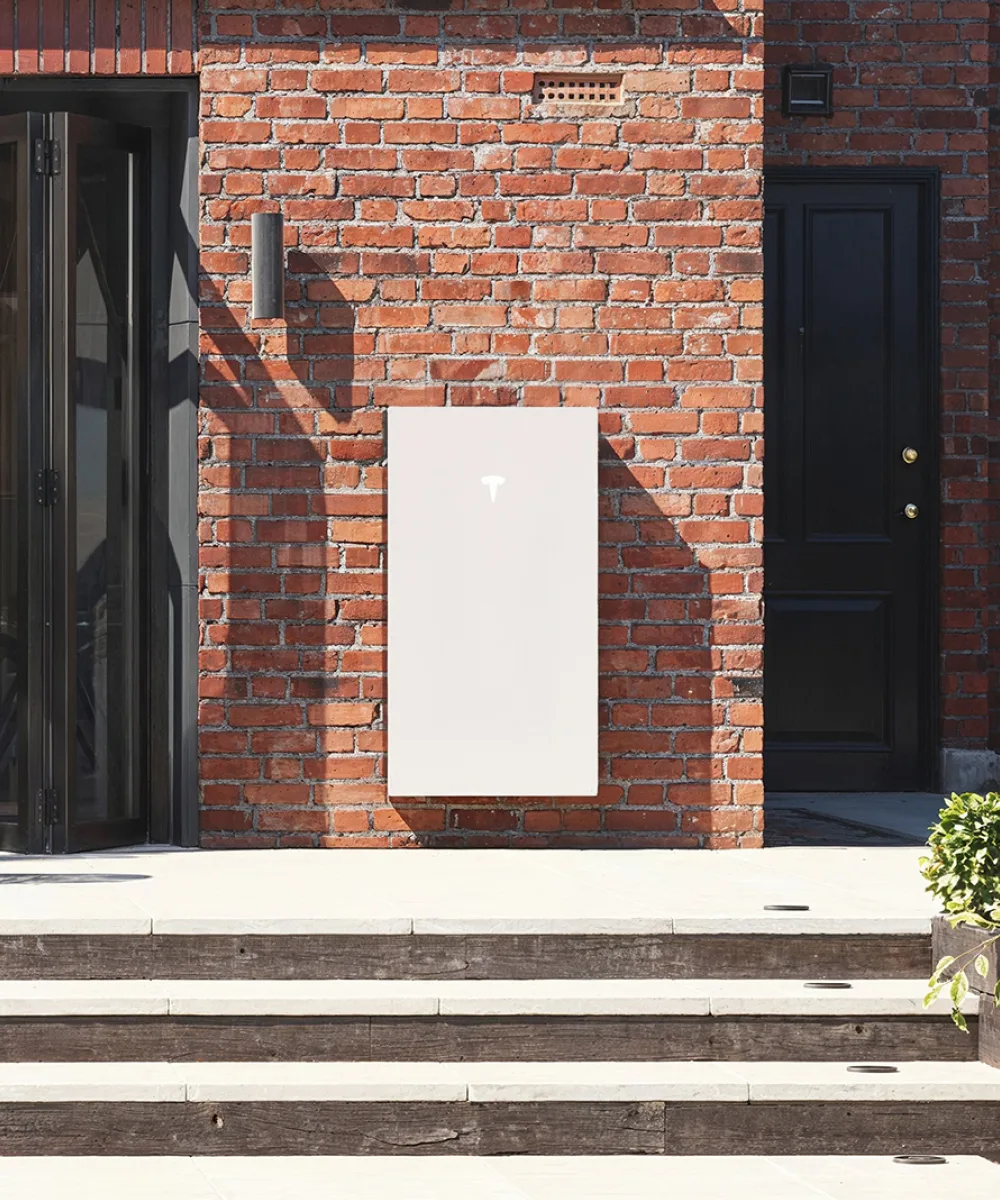

Tesla Powerwall 3
Tesla's home battery: 13.5kWh of storage, a built-in solar inverter, optional backup and simple control from the app.
Explore Tesla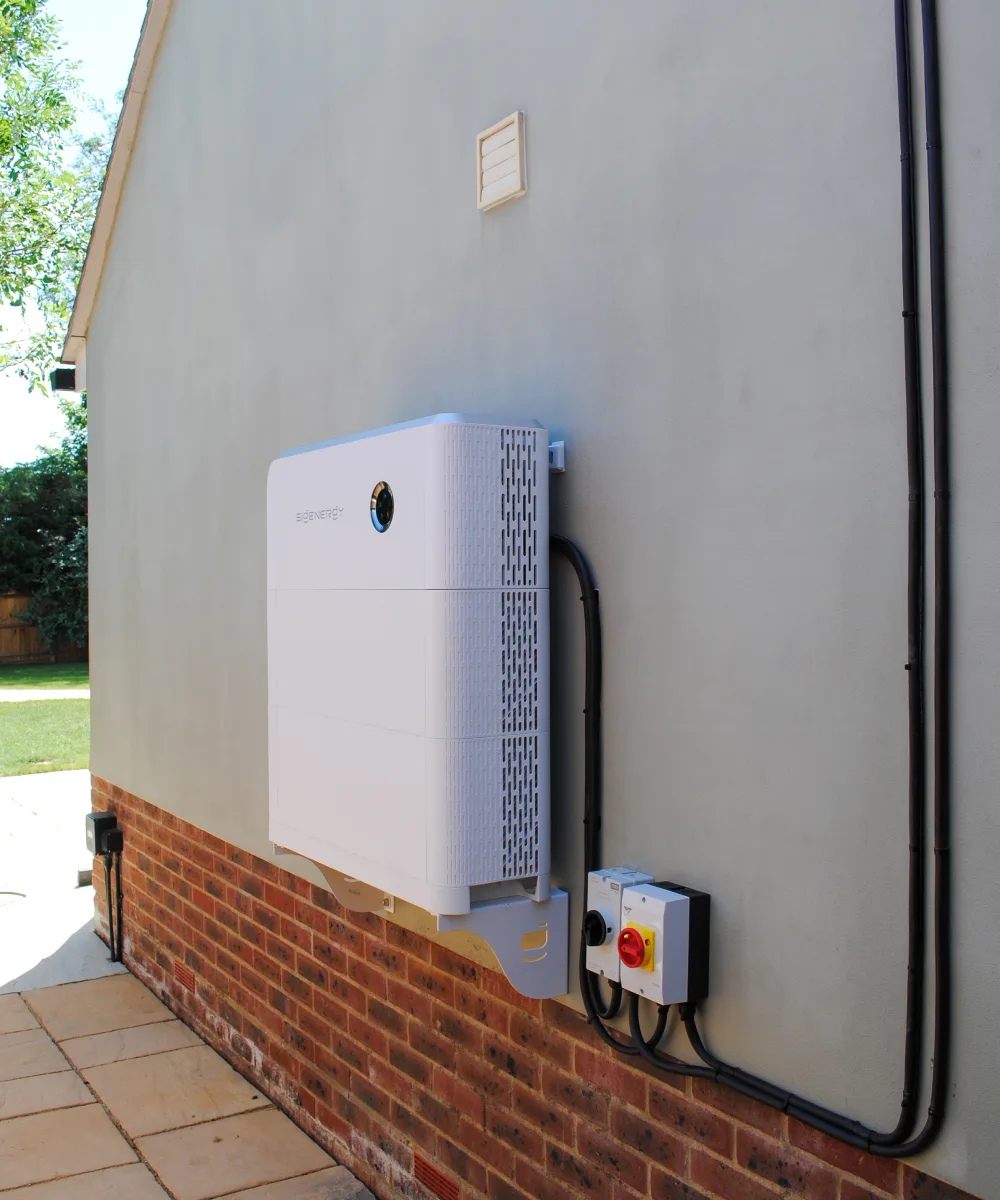

Sigenergy SigenStor
A modular five-in-one system: stack up to about 54kWh per tower, expand any time and add DC EV charging to the same tower.
Explore SigenergyWhat homeowners actually ask.
How much battery capacity does my home need?
Most three and four bedroom homes land between 10 and 20kWh, but the honest answer comes from your evening and overnight consumption, not your house size. We size from your actual usage data, and with Sigenergy's modular design you can start smaller and stack another module later.
Will it power my home in a power cut?
Only if a backup gateway is fitted. Without one, regulations require the system to shut down when the grid fails. With Tesla's Backup Gateway 2 or Sigenergy's Gateway, your home switches to battery power automatically, without a break on the Sigenergy side when the backup load is within the system's rating. Whether that covers the whole home or chosen circuits depends on how your system is designed, and we agree it with you before installation.
How long do home batteries last?
Both platforms we fit carry 10 year product warranties (Sigenergy's is extendable to 15 years) and are engineered for daily cycling well beyond that. SigenStor uses LFP chemistry with five layers of battery protection; Powerwall is the most proven battery in the category. Degradation is gradual, not a cliff edge: a well-used battery still holds most of its capacity at the end of its warranty. Both manufacturers' warranties expect the battery to stay connected to the internet, so we set that up at handover.
Can I add a battery to my existing solar system?
In most cases, yes. Both Powerwall 3 and SigenStor can retrofit alongside an existing array. At proposal stage we confirm the right configuration for your inverter and DNO connection, and we handle any G99 paperwork the change requires.
Where does the battery go, and is it noisy?
Garages, utility rooms, plant cupboards and external walls are all common: both platforms are weather-rated for indoor or outdoor installation. Both are quiet in use: Tesla rates Powerwall 3 at typically under 50dB(A) at one metre.
Is there really no VAT on battery storage?
Correct: batteries and solar panels installed in homes in Great Britain carry 0% VAT until 31 March 2027, when the rate is due to return to 5%, whether fitted together or on their own. It's a meaningful saving on the install cost, and it's already reflected in every Powergy quote.
Read the guide.
Solar and batteries in winter: what to expect
Less sun, same savings logic: what changes in winter, why a battery keeps earning, and how to make the most of the darker months.
5 min read Battery StorageIs battery storage worth it without solar?
Short answer: increasingly, yes. The maths behind tariff arbitrage, and when battery-only genuinely stacks up.
5 min read Battery StoragePowerwall 3 vs SigenStor: how to actually choose
We install both. Here's the decision framework we use with real customers, not a spec sheet shootout.
6 min readFind out what storage saves your home.
Two minutes with the calculator, or send us a bill for the real numbers, free and with no obligation.
Estimate your saving